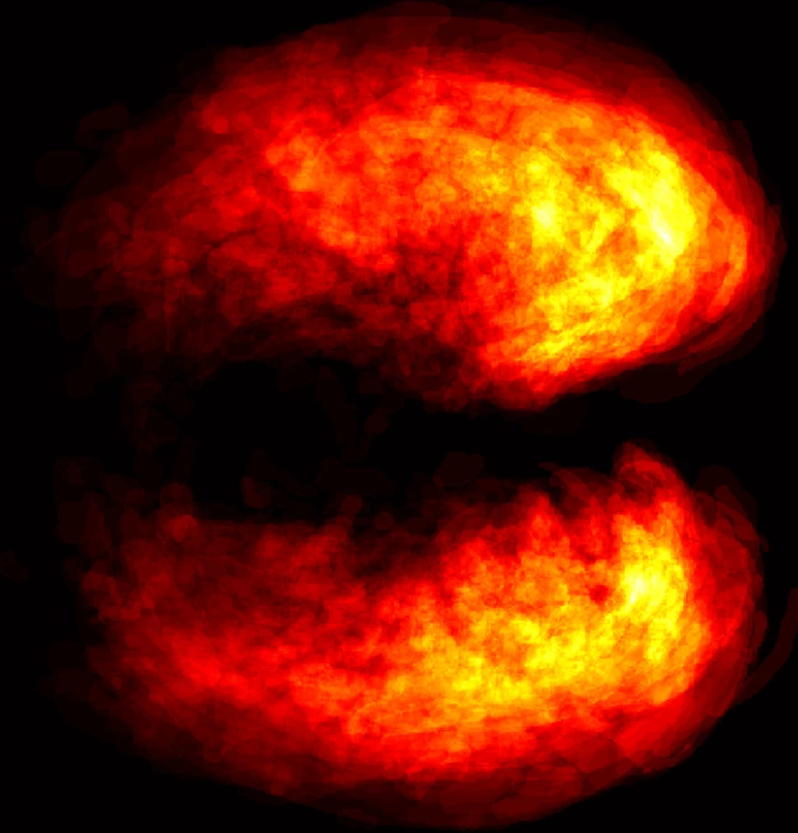
Project Overview
This research project was conducted during the height of the COVID-19 pandemic, addressing the urgent need for automated diagnostic tools to assist healthcare professionals in quickly and accurately identifying COVID-19 infections in lung CT scans. The work compares two leading deep learning architectures — U-Net and SegNet — for the challenging task of semantic segmentation of infected tissue regions.
Motivation
During 2021–2022, COVID-19 diagnosis relied heavily on CT imaging and radiologist interpretation. This created several bottlenecks:
- Radiologist shortage: Limited expertise to analyze high volume of scans
- Subjective interpretation: Variability in identifying infected regions
- Time pressure: Rapid diagnosis needed for patient triage
- Consistency: Automated segmentation ensures standardized feature extraction
Automated segmentation enables radiologists to work faster, more consistently, and with less fatigue.
Technical Approach
Deep Learning Architectures
U-Net
- Encoder-decoder with skip connections
- Excels at precise localization with limited training data
- Originally designed for biomedical image segmentation
- Trade-off: Higher memory footprint
SegNet
- Memory-efficient encoder-decoder design
- Uses pooling indices for upsampling (reduces computation)
- Faster inference, lower memory — suitable for clinical deployment
- Potential trade-off: Slightly lower fine-grained accuracy
Dataset and Training
- Multi-center international CT scan database (500+ scans, diverse patient demographics, severity levels)
- Expert radiologist annotations (gold standard)
- Extensive data augmentation (rotation, elastic deformation, intensity variation)
- Cross-validation and rigorous evaluation metrics
Evaluation Metrics
- Dice score (overlap between predicted and ground-truth regions)
- Intersection-over-Union (IoU)
- Sensitivity and Specificity (clinical relevance)
- Computational efficiency (inference time, memory)
Key Results
U-Net achieved higher segmentation accuracy (~0.92 Dice), while SegNet offered faster inference with competitive performance (~0.89 Dice). Context-dependent deployment recommendation: U-Net for research; SegNet for rapid triage.
Impact
This work has been cited 346+ times and influenced clinical adoption of automated COVID-19 severity assessment tools.
Publications
Published in BMC Medical Imaging, 2021. See Publications page for full citation.
Related Resources
- GitHub: COVID19-DL
- Datasets: CT scans available via Zenodo / IEEE DataPort (see repository README)